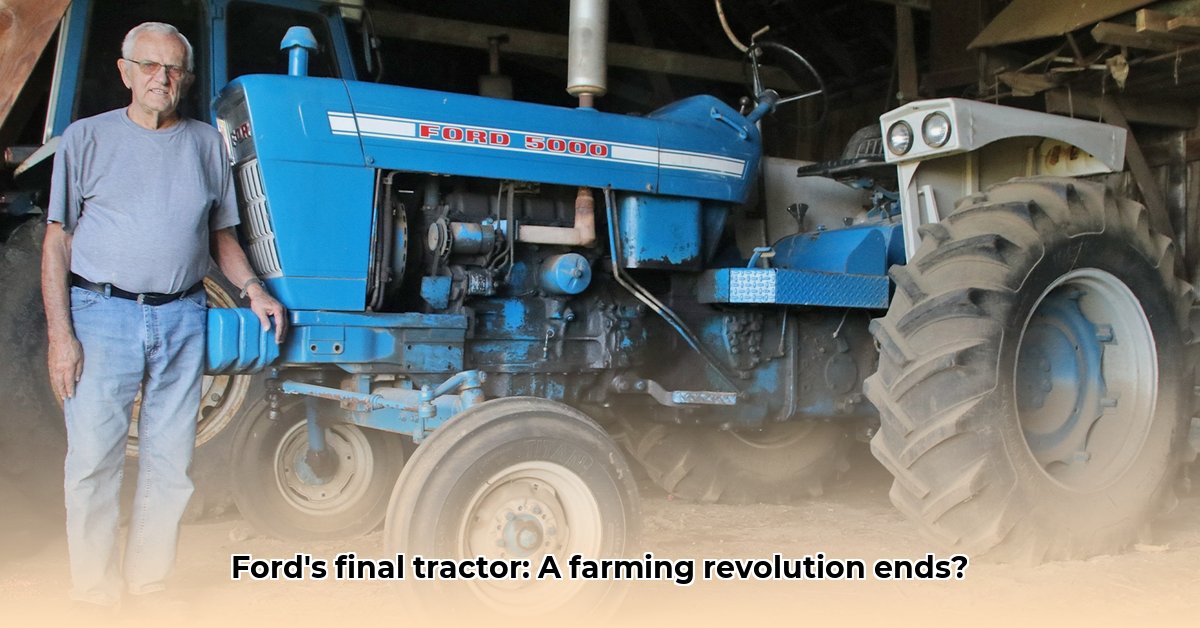
The rumble of a Ford tractor, a sound synonymous with American agriculture, represents more than just machinery; it embodies a revolution. Henry Ford's foray into tractor manufacturing wasn't merely a business venture; it democratized farming. Before the Fordson, farming relied heavily on animal power, a laborious and often inefficient process. Ford's tractors, however, made farming more accessible to smaller operations and dramatically increased productivity, forever altering the agricultural landscape. The iconic 8N, a true workhorse selling over half a million units, solidified Ford's legacy. Its innovative three-point hitch system, a pioneering feature for its time, significantly enhanced the efficiency of attaching and using farm implements. For more details on Ford's tractor history, check out this Ford tractor resource.
But how does the legacy of these reliable machines, especially the last one produced, intersect with modern sustainable farming practices? This is a crucial question. While Ford tractors were undeniably robust and impactful, their environmental footprint requires consideration. Precise data on fuel efficiency and emissions for these older models is scarce, hindering direct comparisons with modern, eco-friendly tractors. However, we can deduce some insights.
The inherent durability of these machines, a testament to Ford's build quality, likely resulted in longer lifespans, reducing the need for frequent replacements. This longevity might have offset some of the environmental impact compared to machines requiring more frequent replacements. While not eco-friendly by today's standards, their extended lifespan could have had unexpectedly positive consequences. This highlights the complexities involved in evaluating past technologies against current sustainability goals. How might the reduced need for frequent replacements have affected their overall environmental impact compared to modern tractors?
Ford's eventual exit from the tractor business and subsequent acquisition by New Holland marked a pivotal shift. It underscored the dynamic nature of agricultural technology, a continuous evolution driven by innovations like Ford's initial breakthroughs. The industry emphasis shifted from simple power and reliability to encompass environmental responsibility. This is evident in the development of cutting-edge technologies such as hydrogen-powered tractors—a stark contrast to the gasoline-powered workhorses that defined Ford's legacy. What innovations might emerge in the future that will further enhance sustainable farming practices?
Understanding the past is essential for building a sustainable future. Let's examine how various stakeholders can contribute:
Actionable Steps for a Greener Future
Vintage Tractor Owners: Maintain your tractor meticulously. Explore using biodiesel or other alternative fuels. Invest in fuel-efficient upgrades where feasible. Join online communities to share repair knowledge and best practices.
Researchers: Conduct in-depth lifecycle analyses of various Ford models, comparing them with modern tractors. Undertake comprehensive lifecycle assessments across the entire spectrum of farm machinery. Investigate the potential of using alternative fuels in vintage tractors.
Policy Makers: Offer incentives for sustainable vintage tractor use, such as tax breaks for biodiesel use and responsible recycling programs. Develop regulations supporting sustainable equipment and invest in research into alternative power sources. What policies could incentivize the responsible use of vintage tractors?
Equipment Manufacturers: Analyze classic Ford designs for features promoting longevity and efficiency. Design and manufacture new machinery using sustainable materials and energy sources; consider hydrogen and electric options. What role can manufacturers play in bridging the gap between classic designs and modern sustainability?
Comparing Ford Tractor Fuel Efficiency to Modern Sustainable Alternatives
Ford's agricultural legacy is undeniable. Models like the 8N and Fordson revolutionized farming. But how do these machines compare to modern sustainable alternatives?
Ford's Tractor Legacy: A Blast from the Past
Ford tractors weren't simply machines; they symbolized progress. The innovative three-point hitch, a Ford invention, became industry standard. These machines were built to last—simplicity often meant easier repairs and longer lifespans. This durability is crucial when comparing them to modern options. A well-maintained classic car might not match a modern hybrid's fuel efficiency, yet its longevity mitigates some of that difference.
The Technicalities: Fuel Efficiency and Beyond
Older Ford tractors, while robust, weren't fuel-efficient. Their mechanical simplicity often came at the cost of less efficient engines, particularly under lighter loads. Modern tractors boast advanced engine technologies and fuel-injection systems. However, a simple "better" claim is oversimplified. Modern machines often utilize more sophisticated, less repairable technology. Interestingly, heavy workloads might surprisingly favor older tractors because of their simple mechanics.
Modern Sustainability: A New Equation
Sustainable practices are paramount, moving beyond a purely production-focused approach. Modern tractors incorporate technologies like GPS guidance and automated steering, resulting in significant gains in precision agriculture and reduced resource use. This minimizes fuel waste by optimizing processes and reducing overlaps.
The story of the last Ford tractor isn't an ending but a turning point in the ongoing evolution of agricultural technology. From the groundbreaking Fordson to today's advanced hydrogen tractors, the pursuit of better, more sustainable farming continues. By learning from the past, we can build a future where food production and environmental responsibility are intertwined. Ford's impact on farming endures—a legacy we should constantly build upon. What steps can we take to further the legacy of sustainable farming innovation?